 Mar 11, 2014
Let’s Talk About Centrifugal Compressors

Centrifugal Compressor Design
We all know by now that no machine is perfect. Turbines have carryover losses, pumps experience cavitation phenomena, and compressors certainly have their fair share of pros and cons. We’re on the hunt for some common design problems – perhaps problems that you have experienced yourself, with centrifugal compressors. We scoured through our technical papers and presentations and searched the web for some. Here’s a list of frequent concerns and questions we ran into:
- 3D Stress Estimations – A difficult problem with designing a centrifugal compressor is the estimation of 3D stresses on the preliminary design phase when only blade geometry is presented but there is no specific detail on disc design or more. However, this is an important design task because of loading and centrifugal forces that lead to high stresses can affect the overall design – and design engineers need to catch the problem on the first phase of design.
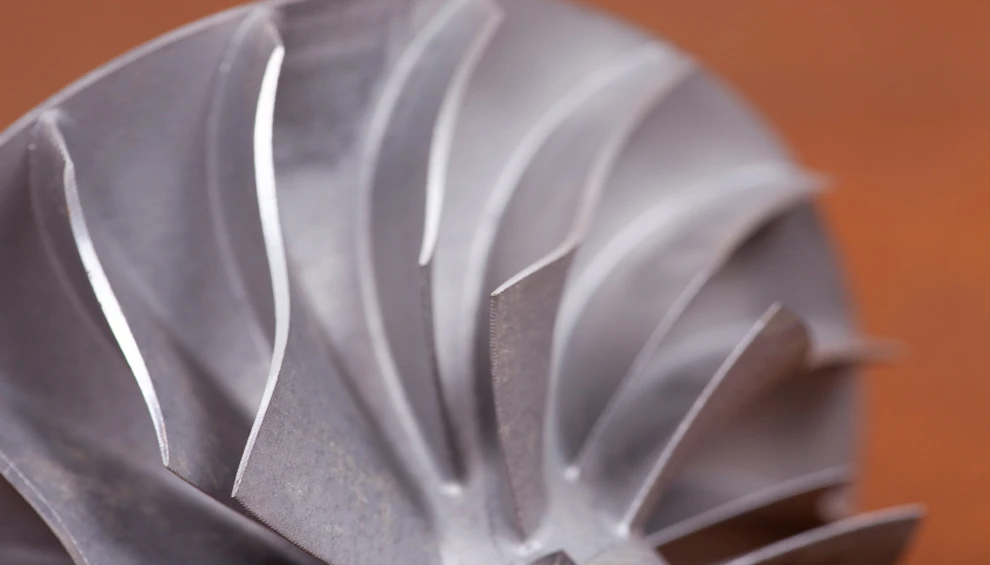
- Estimating Losses and Loading during Impeller Design –The total enthalpy and pressure raise of a compressor stage occurs at the impeller, so impeller performances and losses prediction is one of the fundamental tasks for all aspects of centrifugal compressor aerodynamic design and analysis. In this phase of the impeller design process, when you are concentrating on finalizing your blades, it’s important to minimize losses and optimize blade loading.
- Determining Surge – It is normal with compressors that as the mass flow is reduced the pressure rise increases. Generally a point is reached at which the pressure rise is a maximum and further reduction in mass flow leads to an abrupt and definite change in the flow pattern in the compressor. Beyond this point the compressor enters into either a stall or a surge; regardless of the type of change occurring, the conventional terminology for the point of instability of the nominally axisymmetric flow is the “surge point” and the line marking the locus of these points for different rotational speeds is known as the surge line. This means that if the backpressure gets too high, it is easier for the gas flow to flow through the compressor back to its inlet. As it does this the discharge pressure drops. The discharge pressure starts to rise again and the cycle starts all over again. So it’s a flow reversal within the compressor. Low compressor flows, molecular weight changes, surge control problems and other factors can cause surge. Machines that are in surge continuously can damage thrust bearings and cause other problems.
So now the question we have for you is what kinds of design or operational problems have you experienced with your centrifugal compressors? We’re inviting any and all comments to create a discussion about centrifugal compressors and to help us pick our next webinar topic. If there’s some design problem you are experiencing, tell us! Your problem and our solution may be featured in our next webinar. Let’s get the discussion rotating!
"*" indicates required fields
![Fig. 2. External appearance of the turbopump unit (TPU) of a RD0120 engine [3]](https://www.www-softinway-com-dead8c31.faststaging.dev/wp-content/uploads/2025/04/TPFig2.jpg)
![Figure 3: Direct-to-Chip Liquid Cooling Configuration [3]](https://www.www-softinway-com-dead8c31.faststaging.dev/wp-content/uploads/2025/04/DC-Fig-3.png)